Our Products
Product Details
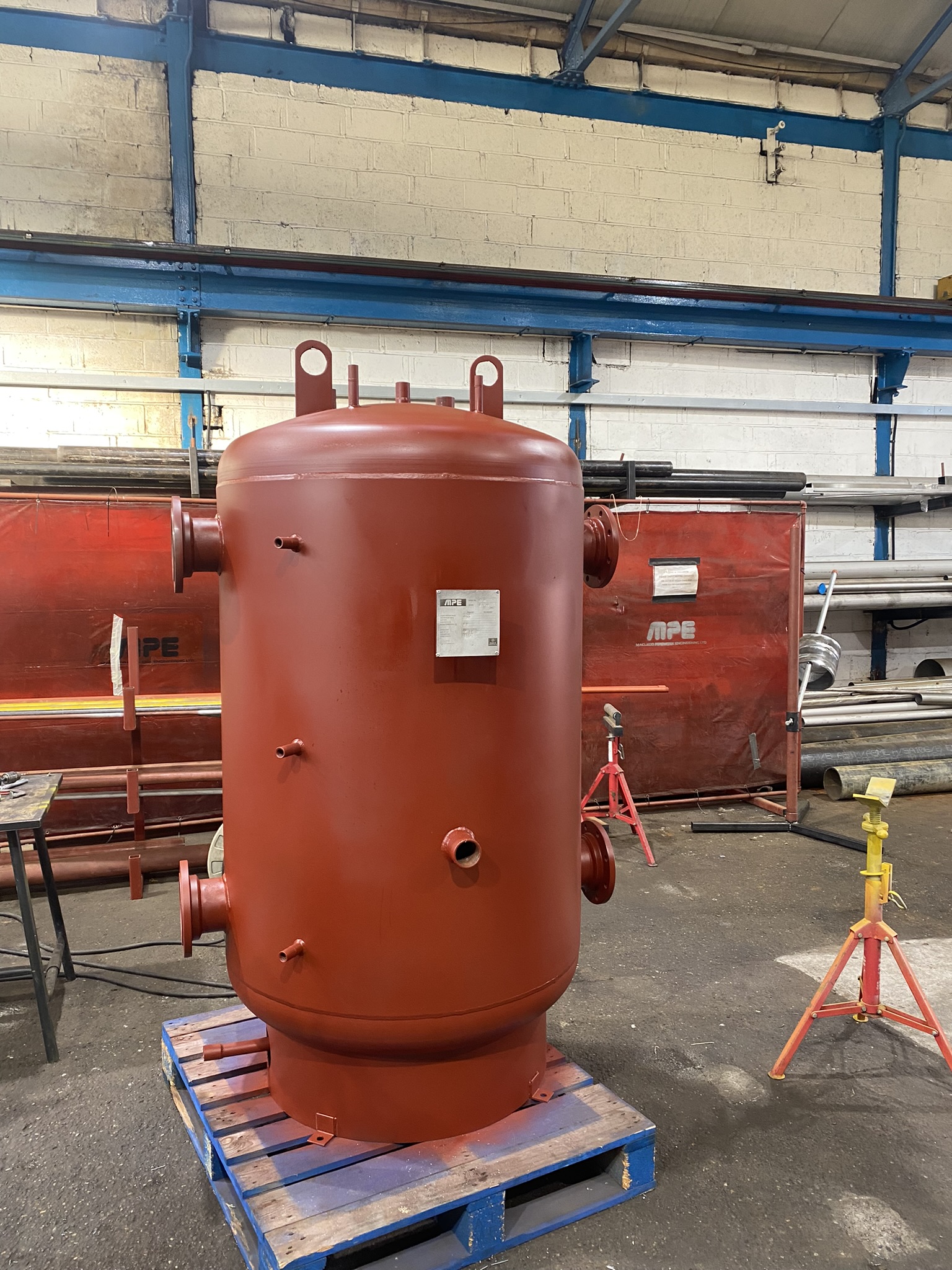
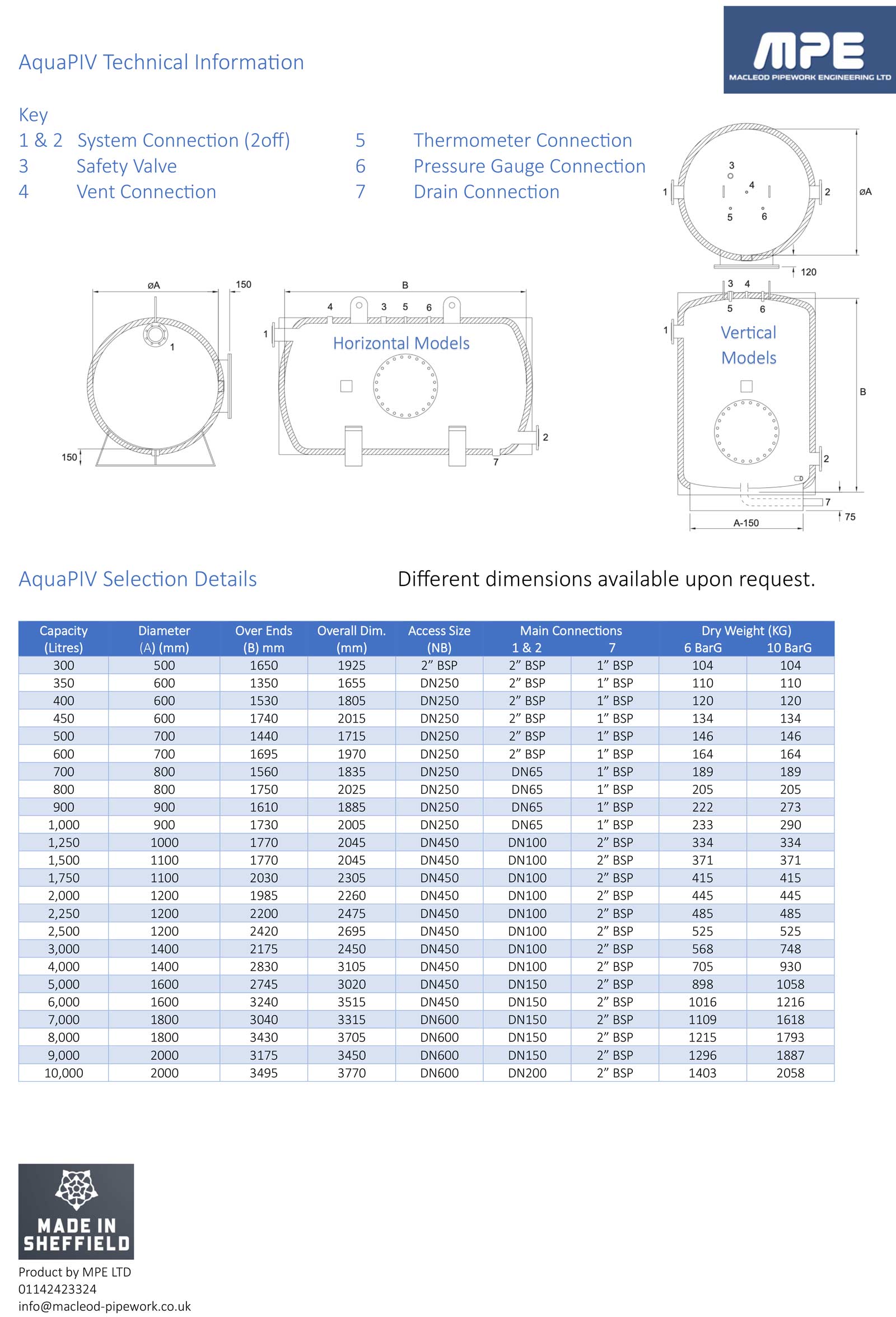
A buffer tank is typically just an insulated vessel of water; it doesn’t usually contain any coils or heat exchangers. Most will have top and bottom connections, and some will have internal baffle plates, sparge pipes and diffusers. Buffer tanks shouldn’t be confused with thermal stores as they are not a substitute for a hot water cylinder.
The primary role of a buffer tank is usually to keep a minimum volume of water ‘in circuit’ at times when the heating load is very low. This prevents the heat pump, ground source, hydrogen boiler or biomass from short cycling as it provides a bypass route to maintain the minimum flow rate through the heat pump if most of the heating zones have shut down. Both the minimum flow rate and the minimum volume of water in circuit are necessary to keep the heat pump working efficiently.
MPE offer a range of different sized buffer vessels in materials such as steel, stainless steel, and galvanized steel.
MPE thermal stores are generally fabricated vertically or horizontally. The thermal stores are supplied with either 2 or 4 main connections, however more connections can be supplied in any orientation needed as per customer request. Further to this, additional fittings such as baffles, diffusers, sparge pipes, and even destratification pumps can be fitted to minimise stratification in the in the buffer vessel.
All buffer vessels can be built to meet the system requirements and any pressure rating with full certification as required and can be UKCE or CE certified with Notified body TUV if requested.
For further information on our LTHW Vessels and the scope of fabrication that can be achieved, please contact MPE to discuss.